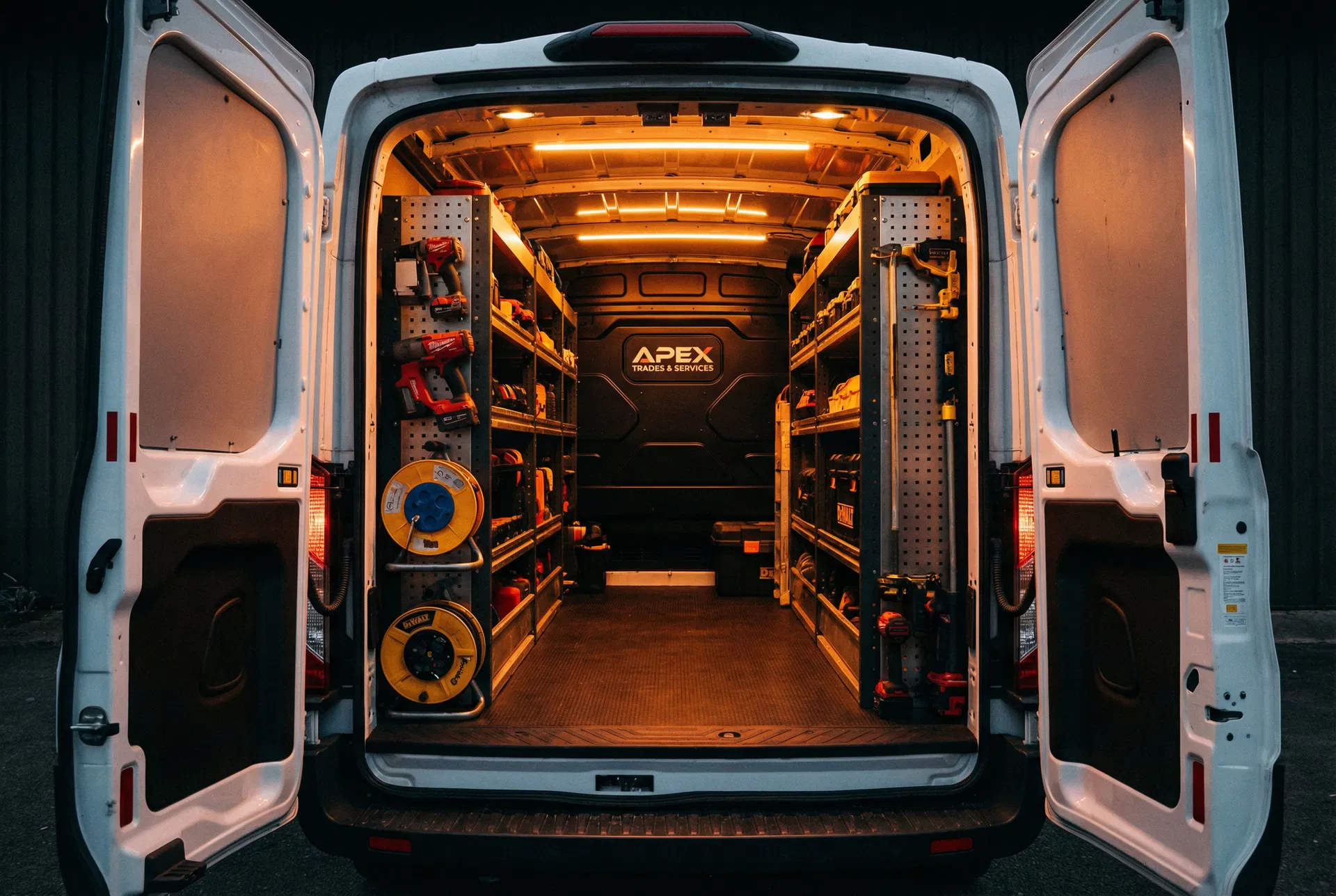
Cargo Van Tool Storage UK — Best Van Storage Solutions 2026
Effective cargo van tool storage is about more than just fitting shelves. It's about creating a system where every tool has a place, every place is labelled, and every item is accessible in seconds — so you spend your time working, not searching.
The Complete Cargo Van Storage Guide
UK tradesmen lose an average of 30 minutes per day searching for tools in poorly organised vans. Over a working year, that's more than 130 hours of lost productivity — worth thousands of pounds in lost billable time. The right cargo van storage system eliminates this entirely.
Modern cargo van storage systems combine fixed shelving for larger items, lockable drawer units for smaller tools and consumables, overhead storage for lightweight equipment, and secure floor-mounted storage for the most valuable tools.
Storage Planning Guide
Step 1 — Audit your kit: Empty your van completely and list everything you carry daily, weekly and occasionally. Step 2 — Plan your zones: Driver side for most-used tools, passenger side for power tools and heavier kit, rear for long items, overhead for lightweight stock. Step 3 — Choose your system: Match your storage to your audit — most tradesmen need shelving plus drawers as a minimum. Step 4 — Label everything: A storage system without labels descends into chaos within weeks.
What is the Best Cargo Van Storage for Tools?
The best cargo van tool storage combines a shelving unit for larger tools and power tools, a lockable drawer unit for smaller tools and consumables, and a secure floor-mounted safe or van vault for the most valuable items.
How Do I Secure Tools in a Cargo Van?
Secure tools in a cargo van using bolted racking systems, lockable drawer units, and van vaults. Never leave expensive tools in an unsecured van overnight. Fit deadlocks and consider a GPS tracker for additional security.
What Size Van Do I Need for Tool Storage?
Most UK tradesmen operate from a medium-wheelbase (MWB) or long-wheelbase (LWB) van. The Ford Transit MWB and Mercedes Sprinter MWB offer the best combination of load space and practicality for most trades.
RELATED PRODUCTS

GET MORE TRADE TIPS
Weekly guides and deals delivered to your inbox.